
From Invisible Help to Intentional Profession: The Story of Nannying in America
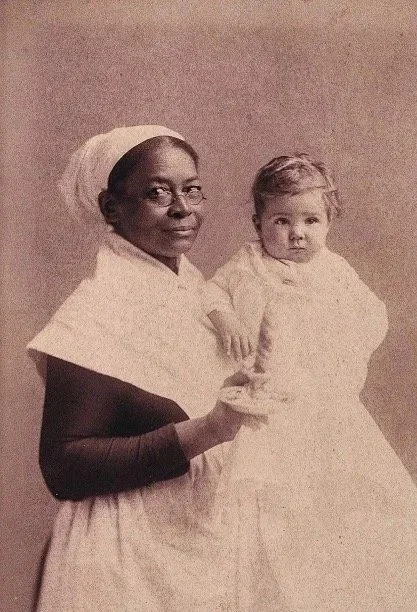
Long before nannying was called a profession, it was simply called necessary.
From the earliest days of American history, families have relied on others to help care for their children. But the story of nannying who did the work, how it was valued, and how it has evolved reveals something much deeper about caregiving, dignity, and whose labor has been seen and respected.
Where It Began: Care as Survival, Not a Career
In colonial America, childcare happened mostly within families and communities. When help was needed, it often came from young unmarried women living in the household, extended family members, or tragically and unjustly enslaved women.
For generations, caring for children was viewed as an extension of women’s “natural role,” not as skilled or professional labor. It was intimate, demanding, emotionally complex work yet rarely named or valued as such.
After emancipation, many Black women were pushed into domestic and caregiving roles due to limited access to education and opportunity. At the same time, waves of immigrant women Irish, German, Eastern European, and later Latina women entered domestic service, often as live-in nursemaids or childcare helpers.
These women raised children, anchored households, and shaped families yet their work remained largely invisible.
This truth matters:
nannying began as essential work, but not respected work.
A Role That Persisted, Even Without Recognition
As the 20th century unfolded, families changed. More women entered the workforce. Extended families lived farther apart. The need for in-home childcare didn’t disappear it grew.
Still, nannies were often referred to simply as “the help.”
Training was rare. Expectations were high. Professional identity was almost nonexistent.
And yet, caregiving quietly shaped lives including the lives of people who would later shape the world.
When Caregivers Go On to Shape the World
Before she became Princess of Wales, Princess Diana worked as a nanny for an American family living in London. Long before the cameras, the charities, and the global recognition, she knew what it meant to care for children day after day to listen, comfort, and show up with presence. It’s hard not to see how those early caregiving experiences shaped the empathy she later embodied on a world stage.
Maya Angelou, one of the most influential voices of the 20th century, also worked in domestic and caregiving roles early in her life. Her experiences often unseen and undervalued deeply informed her understanding of dignity, humanity, and resilience.
Louisa May Alcott, author of Little Women, worked as a domestic helper and caregiver before becoming a celebrated writer. Her close observations of family life and childhood relationships live on in stories that continue to resonate across generations.
These stories remind us of something essential:
nannying has always attracted capable, intelligent, deeply intuitive people—even when society failed to recognize it.
A Turning Point: Understanding the Early Years
Toward the end of the 20th century, something began to shift.
Research into infant brain development, attachment, and emotional regulation made one thing clear: the early years matter profoundly and so do the people who care for children during those years.
Families began asking new questions:
How does my baby learn?
What does respectful care look like?
Who is shaping my child’s emotional world?
Philosophies such as RIE® (Resources for Infant Educarers), Montessori, and other child-centered approaches helped reframe caregiving as intentional, relational, and deeply impactful work.
Nannying slowly began to move from “help” to profession.
A Rare Moment of Recognition
Then came a moment that spoke volumes.
Maria Teresa Turrion Borrallo, the longtime nanny to the children of Prince William and Catherine, Princess of Wales, was awarded the Royal Victorian Medal, a rare honor personally granted by the monarch in recognition of exceptional service.
This was not about fame.
It was not about visibility.
It was about caregiving.
A professional nanny trained, consistent, devoted was publicly honored for her role in raising children.
It sent a powerful message:
the work of caregiving is worthy of recognition at the highest levels.
Where the Nanny Profession Is Headed: Education Is the New Gold Standard in Childcare
Families are asking better questions. Nannies need better answers. They are increasingly seeking caregivers who understand:
Infant and toddler development
Emotional regulation and attachment
Respectful boundaries
Play as meaningful learning
Calm, predictable environments
Agencies now expect education not just experience.
Caregivers are claiming professional identities, seeking training, and advocating for respect.
The role is evolving from invisible labor to visible, skilled, professional work.
Why This Story Matters
When we honor the role of the nanny, we honor childhood itself.
The work of caring for children has always shaped the future whether it was acknowledged or not. Today, it is finally being named, valued, and elevated.
And that evolution matters—not only for caregivers, but for children, families, and society as a whole.
A Final Invitation
The story of nannying is still being written.
Each caregiver carries their own path, how you entered this work, what you’ve learned along the way, and where you feel called next. Whether you’re just beginning or have decades of experience, your story matters.
For those of you who feel called to deepen your understanding of children and yourselves I teach RIE Courses for nannies in English and Spanish, you can check dates here on my website. It’s been transformational for hundreds of caregivers, and I would love to continue this conversation with you there.
And we’d love to hear from you:
What’s your story?
Where do you see yourself headed in this profession?
How are you preparing yourself for what’s next?
Share your reflections in the comments below.
When caregivers tell their stories, we strengthen the profession together.