
Stop Entertaining, Start Shaping: The Nurturing Nanny™ Shift.
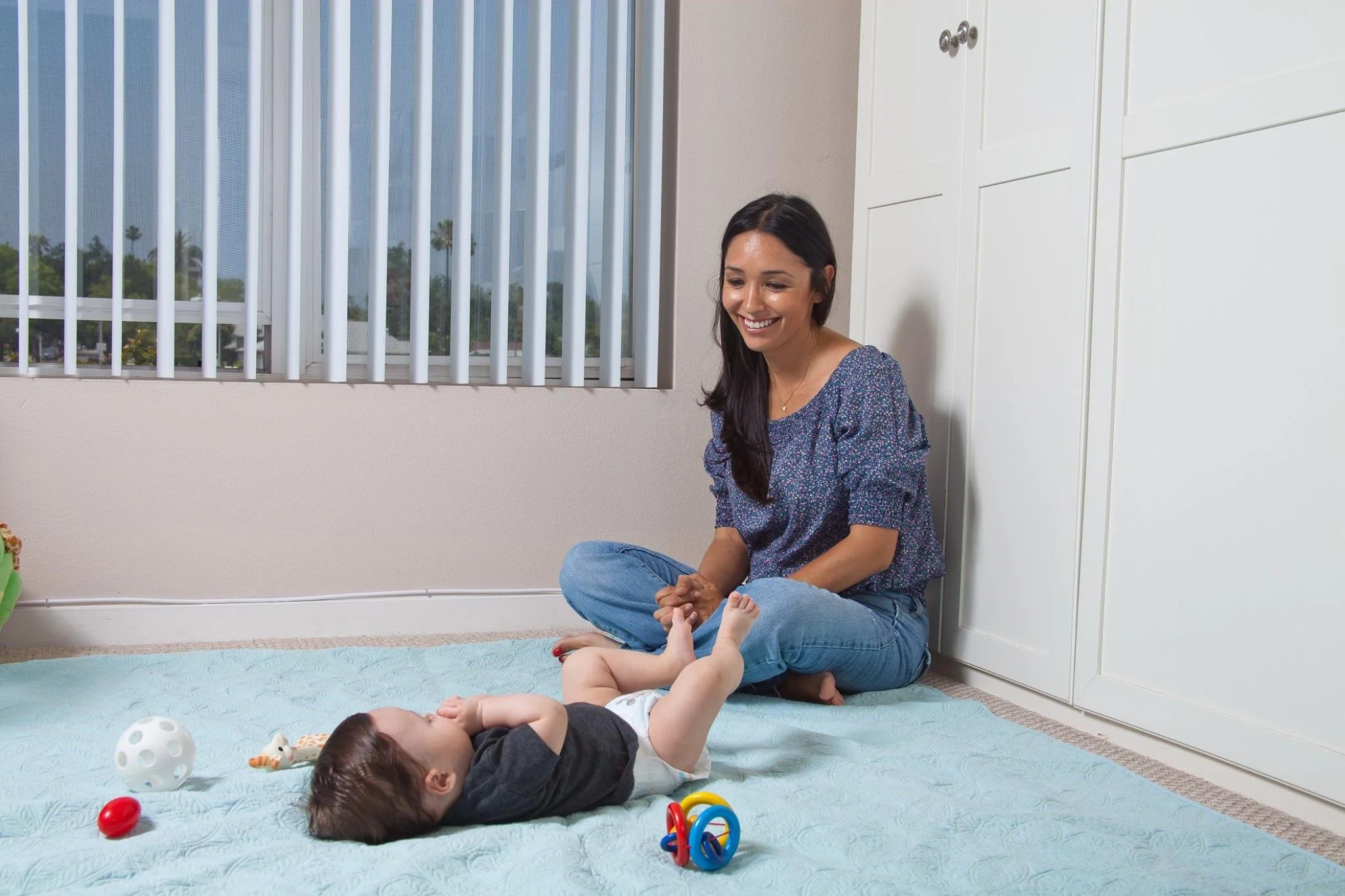
Dear nanny, you are not just caring for a child in the present moment. You are participating in the making of a human being.
After 25 years working with children, one thing has become very clear to me: what shapes a child is not how much we do for them, but how we relate to them. And once you really see that, it shifts everything.
Science and Relationships Matter
Science supports this, but most of us have already felt it in real life. A child’s development is deeply connected to the quality of their relationship with the adult caring for them. Your presence matters. Your tone matters. The way you respond and even the way you wait matters.
At the same time, there’s a lot of pressure in this work. Many nannies feel they have to constantly entertain, keep children busy, or show results to prove they’re doing a good job. It’s exhausting. And deep down, it doesn’t feel right because it’s not what children truly need.
Discovering the Educaring® approach helped me understand why.
The Educaring® approach is based on a respectful relationship between the adult and the child, built through attentive care moments, freedom of movement, and uninterrupted play. It sounds simple, but it is deeply transformative. At the core of this work is respect. Not just as an idea, but as something you live in every interaction. You begin to see even the youngest baby as a whole person. Not someone to manage or rush, but someone to be with. You also learn to trust the child’s natural development. We do not rush milestones. We do not try to teach the body what it is not ready to do. We allow development to unfold, and we support it by creating the right environment. When I began to work this way, something shifted.
Observation as a Superpower
Instead of trying to guide every moment, I began to step back, observe, and allow space. And what I saw changed my understanding of children completely. They didn’t need constant input or entertainment. They needed time, time to move, to try, to struggle a little, and to figure things out in their own way.
This became especially clear to me in gross motor development.
I stopped trying to “teach” babies how to move. I stopped placing them into positions their bodies were not ready to get into on their own. I stopped rushing milestones.
Instead, I trusted the process.
And something beautiful happened. Children learned to move with confidence and control. They had time to practice, to fall safely, and to understand their own bodies. I began to notice a quiet consistency, many of the children I cared for started walking when they were truly ready, often steady and grounded, with very few falls.
It wasn’t about doing nothing. It was about creating the right environment and allowing development to unfold.
Moments that matter
I remember my little boy at the park standing on a rope ladder. He climbed to the second step and stopped. Then he looked at me. It would have been easy to assume he needed help, but something about that moment felt different. It felt like he was saying, “Do you see me?”
I let him know I did. He stayed there for a moment, thinking, and then chose to climb down.
A few days later, he tried again. And again. Until one day, he reached the top. He looked at me and said, “My body did it.” That moment has stayed with me, not because he reached the top, but because he experienced himself as capable. He trusted his body. He owned the accomplishment.
That’s the kind of confidence we can’t teach directly. It grows from experience.
One of the biggest shifts in my work was learning how to truly observe. Not rushing in, not fixing, not interrupting—but being present enough to really see the child. Their effort, their frustration, their joy.
When you work this way, everything begins to change. The work feels calmer, more meaningful, and more sustainable. You’re no longer trying to do more you’re understanding more.
Even the most ordinary moments; feeding, bathing, dressing and diapering take on a different meaning. These are not tasks to get through. They are where the relationship is built. A child may experience thousands of diaper changes, and each one is an opportunity to feel either rushed and handled or seen and respected.
Bringing It All Together
Inside the Nurturing Nanny™ course, this is exactly what we explore together. Not how to do more, but how to see differently. You’ll learn what respect looks like in everyday interactions, how to trust a child’s natural development, and how to use observation as one of your strongest tools. And with that comes something many nannies are quietly looking for: confidence. The ability to stand behind your work, to communicate clearly with parents, and to feel grounded in your decisions.
If you’ve ever felt that there must be a more thoughtful, more respectful way to do this work, you’re right. And you don’t have to figure it out alone.
When you change the way you care for a child, you change how that child experiences the world.
And that is the real impact of this work.
I teach the Nurturing Nanny course in both English and Spanish, in person in Los Angeles and San Francisco, as well as online. I invite you to visit my Professional Development page to see upcoming course dates, locations, and how to join us.
Before you go, I’d love to hear from you…
Have you ever experienced a moment with a child where you paused, stepped back, and realized they didn’t need you to do more—they just needed space?
Those moments stay with us. Feel free to share yours below.